Rutt/Etra Web Synthesizer
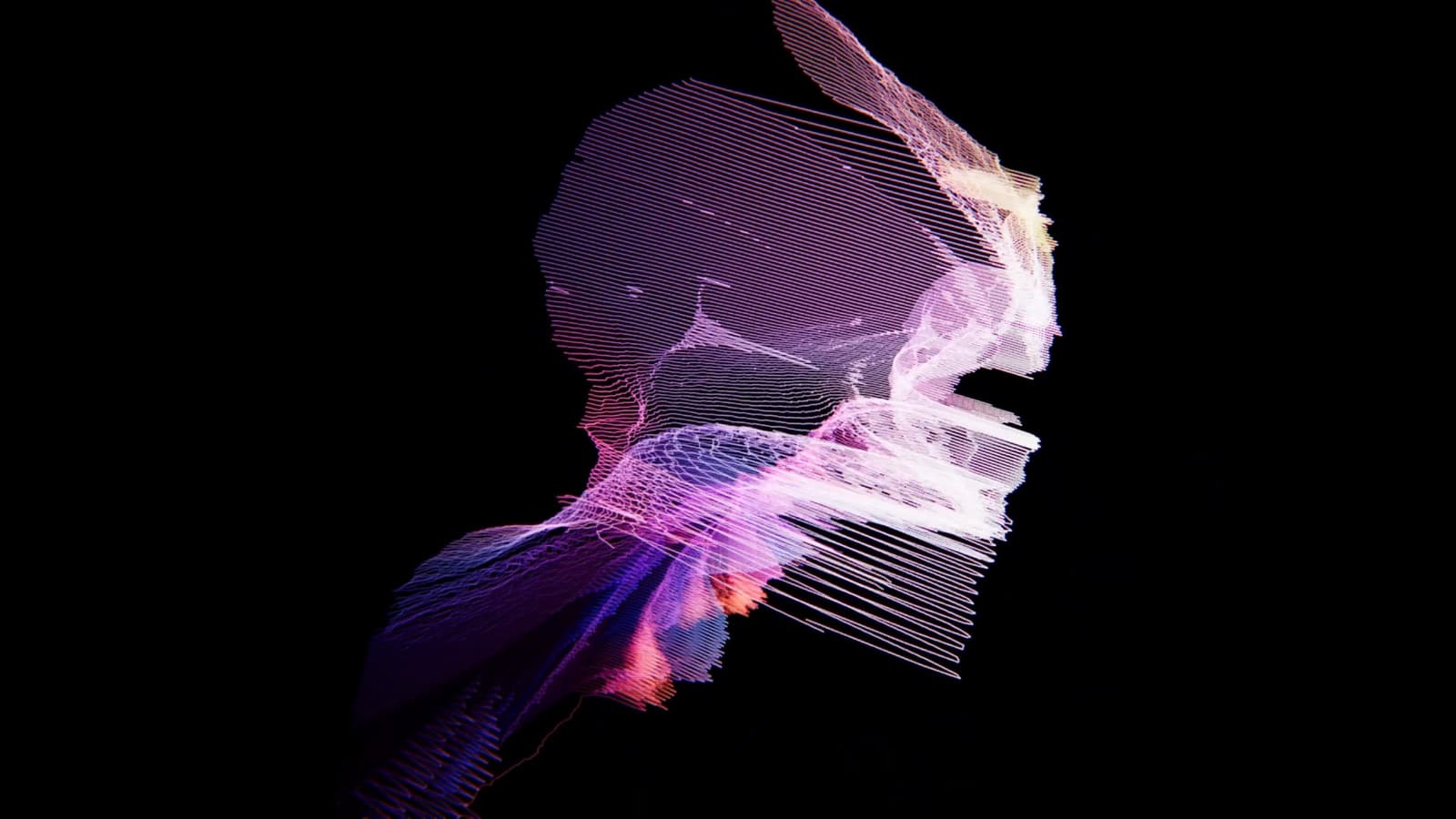
In 1973, Steve Rutt and Bill Etra built a machine in New York that could bend television. The Rutt/Etra Scan Processor did not filter a picture. It reached inside the tube and steered the beam. Brighter became higher and darker became lower, so a flat image turned into a landscape drawn in light. Fed real video, every line is painted by the source’s own colour.
Only about seventeen to twenty-one were ever built, and the tube inside each one burned out. When the hardware goes, the practice goes with it.
Rutt/Etra Web rebuilds the instrument from its own documentation. An AI was pointed at the archive: the brochure, the manual and the panel diagram. It read all of it, wrote a specification, and built the instrument against it, with a person directing every decision. It runs in a browser. There is nothing to install, no backend and no waiting list. It is one link, and it is open source.
The instrument
- The original control set. Every knob from the Rutt Electrophysics brochure is a live control: position and size, Z push, beam intensity and focus, rotation and spin, scan rate, H/V linearity, luminance threshold, contrast and gamma. A second raster can be woven in line by line.
- Sources. Webcam, screen capture, video files, stream URLs, and a 16-pattern generator for when there’s no camera.
- A patchable faceplate. The Patch Bay lays the whole machine out as modules with jacks. Drag a cable from an oscillator into depth, and the picture breathes. Modulation also runs as a hardware-style function-generator matrix and as a node graph with around 50 node types.
- Anything that moves can move the picture. Audio with beat detection, MIDI, OSC, gamepads and control voltage all patch in, with a timeline of scenes and keyframes on top.
- Played by an AI, too. An MCP bridge lets an AI agent drive the instrument with live commands.
- Outputs. Recording, stills, share links, streaming to OBS, WebXR, and anaglyph and side-by-side stereo.
- A phone layout built like a camera app: a camera, a shutter, and a look for every mood.
Workflow
The synth is built with Vite and vanilla TypeScript, with three.js for WebGL and no UI framework. The build is a folder of static files that can be hosted anywhere. A manual and a 31-lesson video course ship with it. The course is recorded by a scripted pipeline that drives the real app in a browser with Playwright, adds synthesized narration, and cuts the result with ffmpeg. That way, when the interface changes, the lessons can be re-recorded rather than re-shot by hand.
A machine that survived as documentation, rebuilt from that documentation, for the next generation of media artists. The code is on GitHub, free for anyone to read, fork and build on.