Skip to content

Reilly Donovan

Design prototyper and creative coder — seven years leading AI/AR/VR interface design and prototyping at Meta Reality Labs, alongside a decade of AI/AR/VR art installations shown in museums, galleries, festivals, and public space.

Scroll — 01 Showcase ↓

01Showcase

Selected work

Meta Quest · WebXR · Connect '22

Project Flowerbed

Immersive WebXR gardening for Meta Quest — design and prototyping lead. Unveiled at Connect '22, open-sourced by Meta.

Polys WebXR Awards 2023 — Entertainment Experience of the Year Awarded to the Meta WebXR team
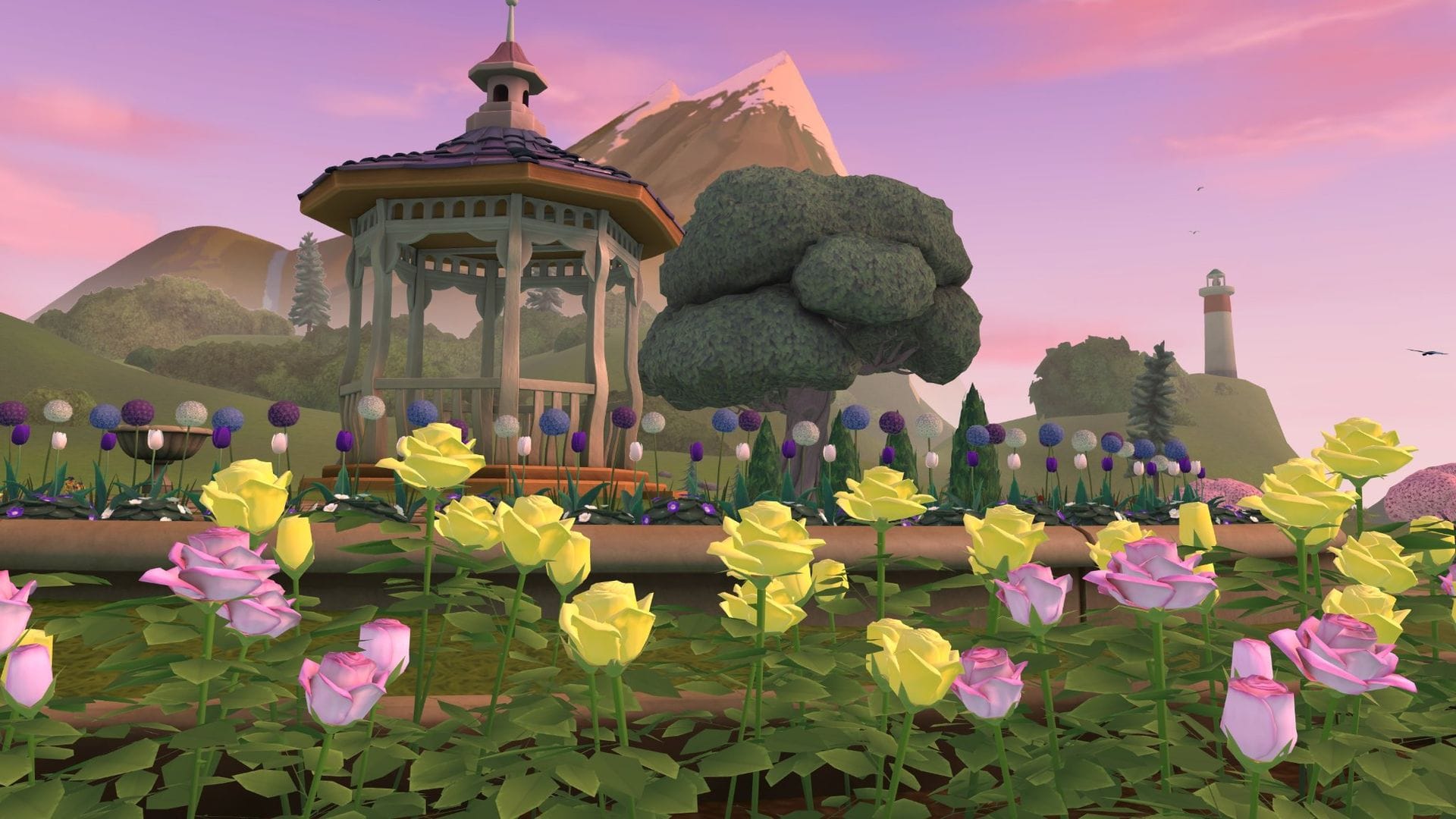
Project Flowerbed — a garden of roses and alliums around a gazebo at sunset, rendered in WebXR on Meta Quest

As design and prototyping lead I owned the experience end to end: the core planting and watering loop, the Polaroid camera and its printed, grabbable photo, the hand and grip states, the layout and pacing of the garden itself, and the visual direction of its assets. Meta open-sourced the build, so the finished experience — and the design decisions inside it — are still public. The team's work took Entertainment Experience of the Year at the 2023 Polys WebXR Awards.

Meta Quest OS · 2D platform

Oculus Browser & Quest 2D Platform

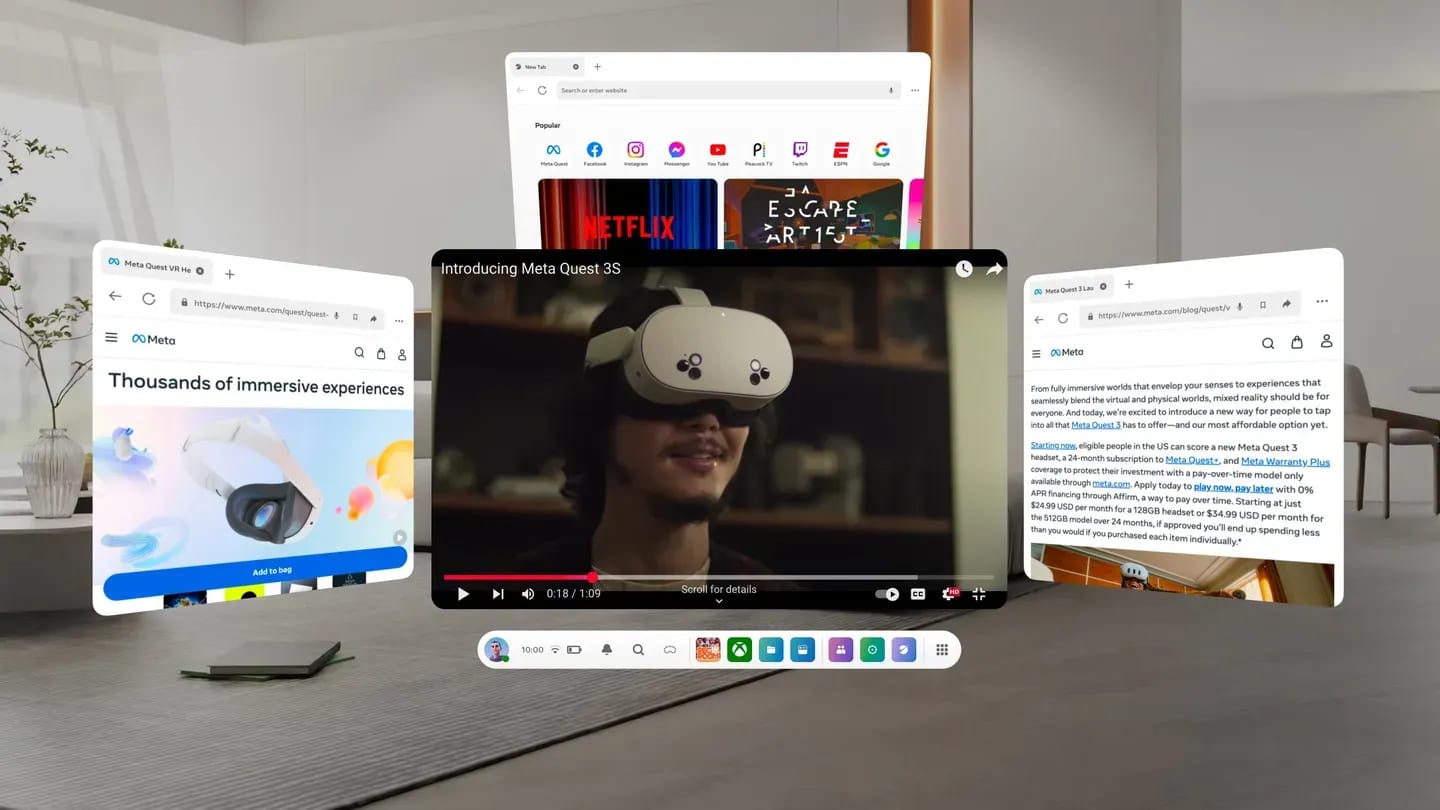
Multi-window browsing, freeform resize, tab management — prototyped and research-validated ahead of successive Quest OS releases.

Four Meta Quest Browser windows open at once in a room — a new-tab page of site shortcuts, a web page, a playing video, and an article

For several years I led design prototyping across the Browser's feature surface — multi-window, freeform resize, tab management, immersive video, in-app browser access — one of a small group shaping how Quest's 2D platform would work. UX research validated those concepts, and engineering teams carried them to production across successive Quest OS releases. The browser served as the initial test bed: patterns proven there translated up to the system level as Quest's 2D platform matured. That feature area is now how most people use the headset: Meta reported in 2024 that over 60% of active Quest 3 users were multitasking with mixed reality panel apps.

Also on the 2D platform

Facebook & Instagram on Quest

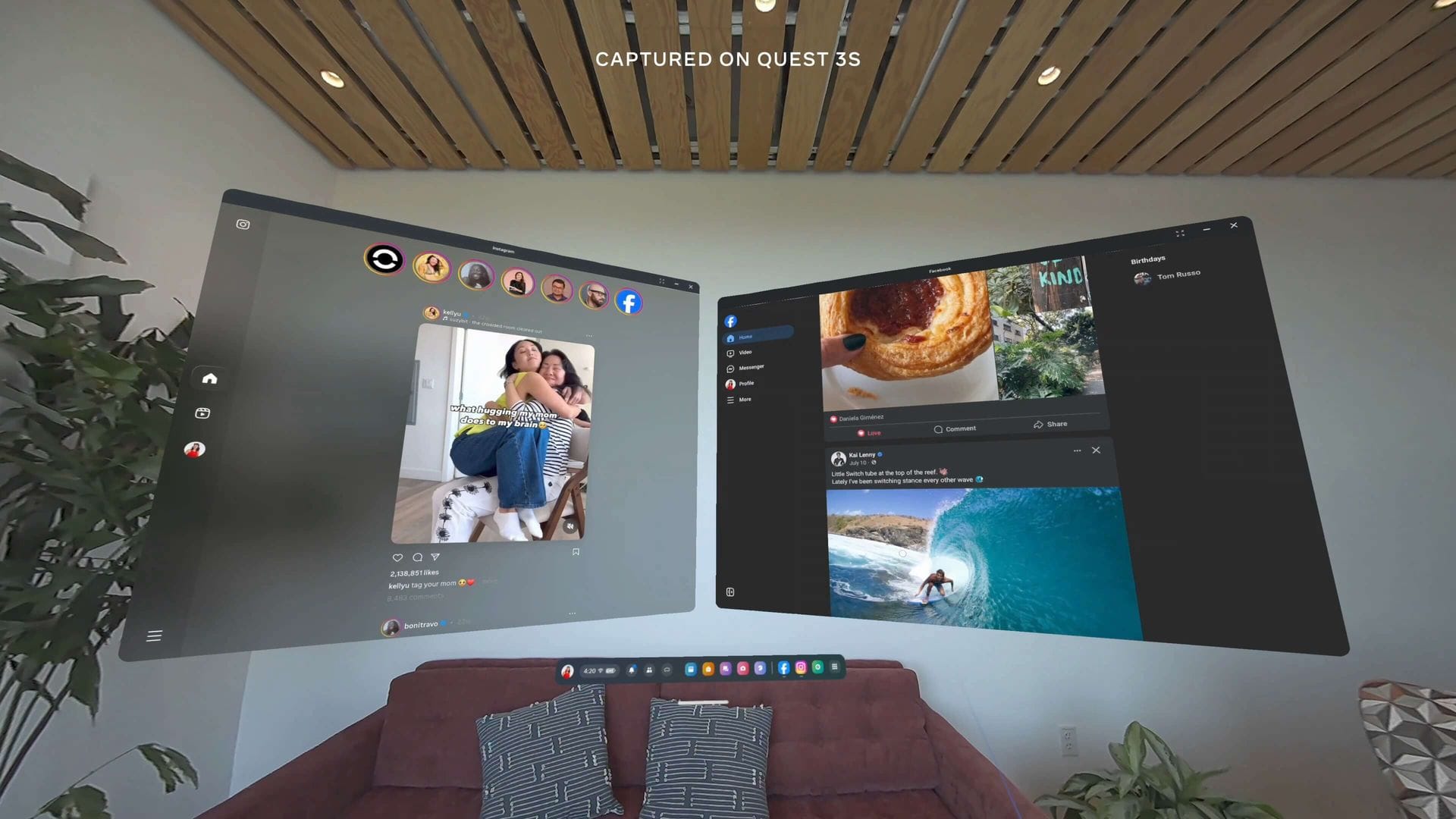
Instagram and Facebook open side by side as panels in mixed reality on Quest, Instagram playing a Reel

I partnered with product designers from Instagram and Facebook to bring their apps into VR, prototyping and iterating with each team rather than for them. The problem was fidelity under a change of medium: two mature interfaces people already know by muscle memory, moved into a headset that breaks the assumptions their design systems were built on — without loosening either brand's language along the way. That included how vertical short-form video reads when there is no screen edge to hold it: Reels as large-format, lean-back viewing, with the surrounding UI still unmistakably Instagram's. Those concepts moved through UX research ahead of the rebuilt Facebook and Instagram apps that Meta announced at Connect 2024 and engineering carried to production.

Meta's own product video from Connect 2024 — the shipped result, not my prototypes. Source(opens in new tab)

Meta Quest · Horizon OS · System UI

Horizon OS Navigator

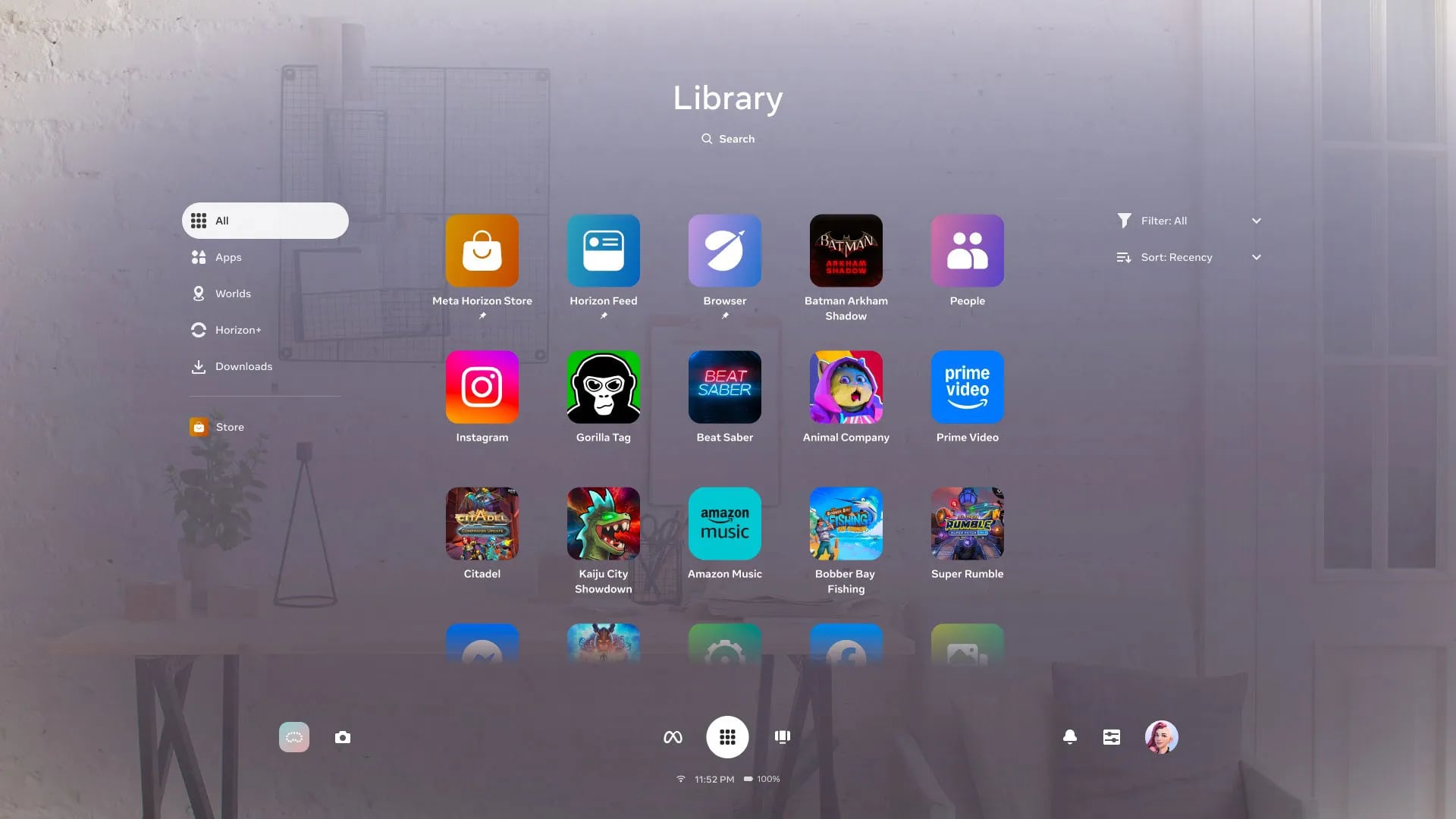
System UI prototyped ahead of the Horizon OS remodel — heads-up display and notification management.

Horizon OS Navigator: the Library view with the system bar along the bottom edge

I led design prototyping on the heads-up display and the rethink of how notifications reach you, and contributed to the wider remodel of Horizon OS toward its current system UI. Those concepts moved through UX research and informed Navigator — the system UI engineering teams carried into public testing in May 2025 (Horizon OS v77) and onto every Quest headset by June 2026. The problem underneath: what earns a place in your view, what can wait, and how something reaches you without taking over the moment you are in.

Meta · AR glasses program · Design research

AI × AR productivity

How everyday productivity behaves in a glanceable, heads-up, AI-assisted interface.

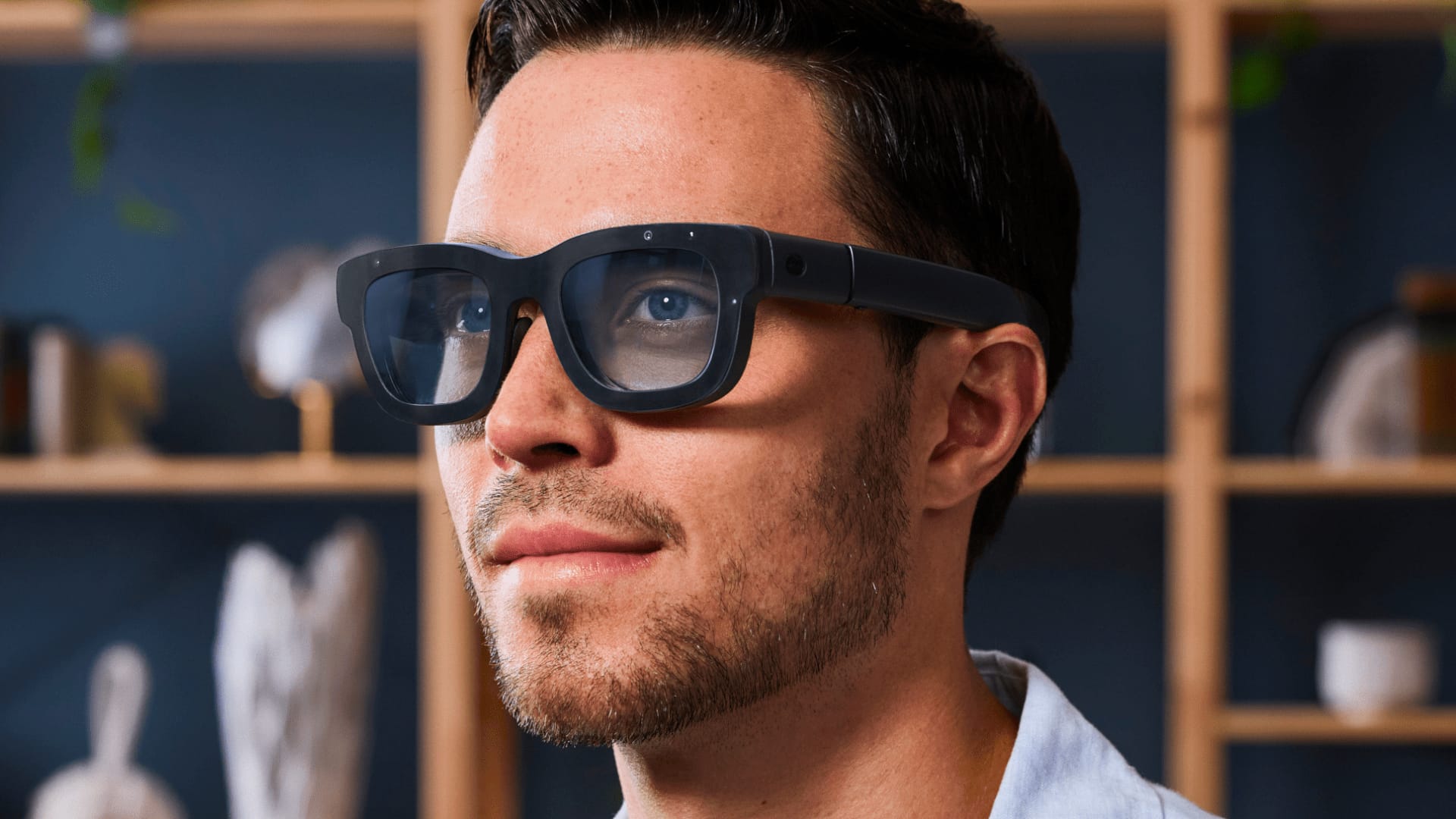
Meta's Orion augmented reality glasses worn in a living room, as publicly announced in 2024
Meta's Orion, publicly announced 2024 — the program's public anchor. Not my prototypes.

I led design prototyping of AI-driven productivity concepts inside Meta's AR glasses program — how a wearable assistant handles the small, frequent tasks that fill a day: responding to an invite, answering a message, moving a meeting, without pulling you out of what you're doing. The AR browser work was validated through UX research. Meta has publicly introduced Orion, its first true augmented reality glasses, as a product prototype informing that consumer AR glasses product line.

How the work moves

Prototype, research, production

The same arc runs under all of the Meta work above.

Prototype

A working answer, not a sketch. Polished enough to put in front of research participants and solid enough to hand to engineering.

Research

Real participants used those prototypes, and what they did with them decided which interactions held and which were reshaped.

Production

Engineering carried the validated interactions forward into shipped Quest and Horizon OS releases.

02Practice

Independent Practice

Four pieces, four different problems: AR built for a public audience, real-time graphics on the open web, concept and collaboration, and directing a generative system end to end.

Murmur — John Grade's kinetic pingo sculpture suspended in a museum gallery

AR · Built for a public audience

Murmur

A mixed-reality layer for sculptor John Grade's kinetic installation, built on Microsoft HoloLens with a companion tablet application. The sculpture takes its form from pingos — Arctic ice mounds that rise over centuries and then collapse — and the mixed-reality layer placed visitors inside that landscape around it.

John designed and fabricated the sculpture; I designed and built the mixed-reality component. It ran a networked multiplayer experience across roughly fifteen HoloLens headsets, so a group shared one mixed-reality layer at once — at the Mystic Seaport Maritime Museum in Connecticut and the Anchorage Museum in Alaska across 2018, on early headset hardware, in gallery lighting, with general-public visitors who had mostly never worn a headset before.

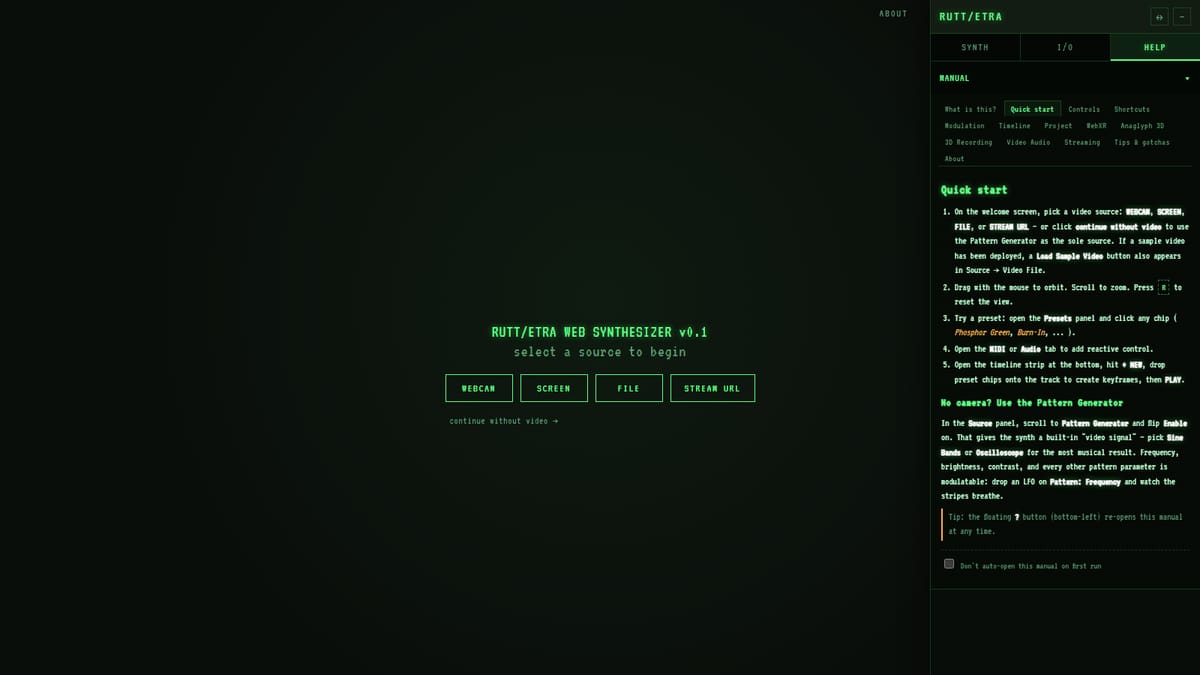
Rutt/Etra Web Synthesizer — a live video feed displaced into glowing scanlines in the browser

Real-time graphics · Open web

Rutt/Etra Web Synthesizer

A faithful browser recreation of the 1973 Rutt/Etra analog video synthesizer, built in Three.js and WebGL with CV, MIDI and OSC control plus WebXR support.

It takes webcam feeds, screen capture, uploads, streams or a URL as its source and runs the whole scanline-displacement pipeline live in the browser — no install, no plugin, publicly usable by anyone with a tab open.

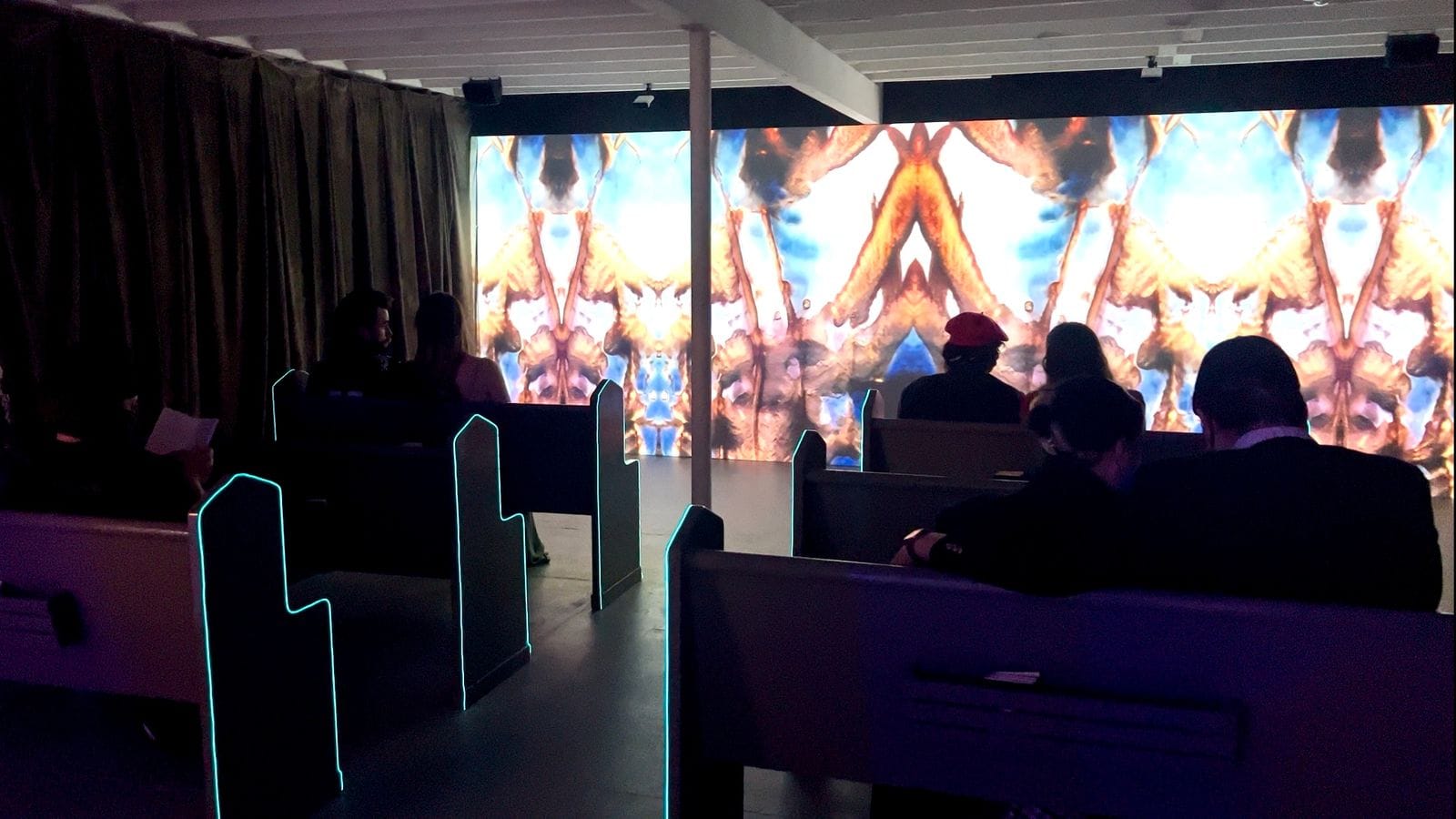
The Word of the Future — visitors seated in glowing pews before a large AI-generated stained-glass projection

AI installation · Collaboration

The Word of the Future

An immersive installation at the Museum of Museums, Seattle, in 2021, made with Jacob Peter Fennell. It posits technology as something we collectively worship: an AI entity generates its own evolving religion — sermon texts, liturgical music, and shape-shifting stained glass — across three rooms that culminate in a dim chapel where it delivers its sermon.

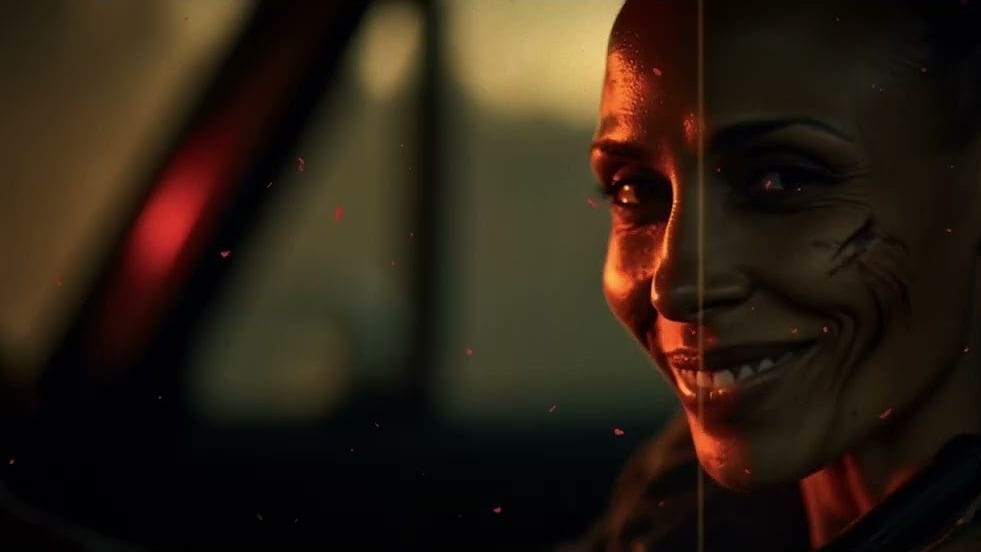
SCRAPHEART — film still: a character lit by red light inside a vehicle at dusk

AI · Directing a system

SCRAPHEART

A generative feature film, currently in post-production, with Chapter One — "The Long Spoon" — public now.

The work is not prompting; it is building the pipeline and the world around it — shot design, continuity of character and place, and a repeatable generative process that holds together across a feature's length.

The same creative-coding practice behind these is what I bring to prototyping — real-time graphics, unfamiliar hardware, and shipping under constraint.

Also: AI Civilization Simulator(opens in new tab) · The Observer Effect · Vesica Pisces · full installation archive

03About

Where I'm coming from

I came to spatial computing from art. I was making interactive and installation work long before product — and when mixed reality arrived, I saw a new medium for expression before I saw a platform. That's still the instinct: how a person meets a system matters more than how the system is built.

I've kept doing that with each new medium. Generative models are the current one — material, not novelty. I've directed a feature film with them, built real-time diffusion pipelines, and trained image models of my own.

Alongside Meta I've kept a new-media art practice, exhibited since 2015 at Design Basel, Currents International New Media Festival, the Seattle Art Fair, and the Seattle Art Museum, with residencies at Pilchuck Glass School and the Museum of Glass. It's its own identity: reillydonovan.com →

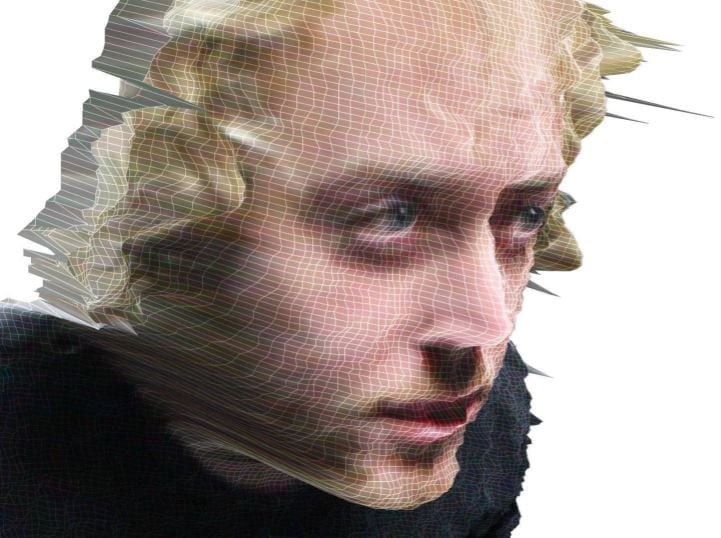
Portrait of Reilly Donovan, rendered as a pointcloud mesh

04Contact

Say hello

reillydonovan3@gmail.com

Open to design prototyping & UX engineering roles — Seattle or remote